
Purchasing an air conditioner is one of the largest appliance choices you will make in your house and the most common error that most people make is buying the wrong size. A small AC will work hard and will not be able to cool your room continuously in the summer season. An over-sized AC will chill too fast, turn off and repeat the process over and over again, known as short cycling which wastes power, raises the humidity and wears the compressor decades before its due.
The right-sized AC? It is efficient, makes your electricity bills predictable, and provides years of consistent and comfortable cooling.
This tutorial will step you through the very process of determining the right size of AC to install in any room in your home, without a degree in engineering. We will apply basic mathematics, real-life application rules, and examples of products to enable you to make an informed decision.
What Does “AC Size” Actually Mean?
By size of AC we do not mean size in physical dimensions. We are referring to cooling capacity – the quantity of heat that an air conditioner can pull out of a room per hour.
This is measured in two ways:
- Tons of cooling – Most popular method of selling ACs in India (1 Ton, 1.5 Ton, 2 Ton, etc.)
- BTU/hr (British Thermal Units per hour) – A more specific unit that is used worldwide.
Here’s how they relate:
| Tonnage | Cooling Capacity (BTU/hr) | Cooling Capacity (Watts) |
| 1 Ton | ~12,000 BTU/hr | ~3,516 W |
| 1.5 Ton | ~18,000 BTU/hr | ~5,100 W |
| 2 Ton | ~24,000 BTU/hr | ~7,034 W |
A single ton of cooling is equivalent to 12,000 BTU/hr. The term is traced to the period when ice was cooling down – it is the quantity of heat required to melt one ton (2,000 lbs) of ice in 24 hours. Nowadays it is just a standard unit of measure.
To put this into perspective:
- The Hitachi 1 Ton 5 Star Inverter Split AC provides 12,000 BTU/hr (3,516 W) of cooling power – this is sufficient to cool rooms up to 110 sq. ft.
- Panasonic 1.5 ton 5 star inverter split ac provides 17,402 BTU/hr (5,100 W) – adequate to serve rooms of 120-170 sq. ft.
- Daikin 2.2 Ton 4 Star Inverter Split AC provides 7,034 W (approximately 24,000 BTU/hr) of cooling capacity – will serve larger rooms to 200 sq. ft.
The initial thing is to comprehend this measure. Now we will decide what you need indeed.
The Simple Formula: Room Size to Tonnage.
The general principle of AC sizing used in India is the most popular:
About 1 ton of cooling capacity is required per 100-120 sq. ft. of room area (assuming a normal ceiling height of 9-10 feet and average heat conditions).
Or, expressed differently:
Cooling (in BTU/hr) required = Room area (in sq. ft.) x 120 BTU/ sq. ft. (This is a tropical climate (such as India) multiplier. Some guidelines use 100-125 BTU/ sq. ft. based on the region and conditions.)
Quick Math Example
Room size: 150 sq. ft.
- 150 × 120 = 18,000 BTU/hr
- 18,000 ÷ 12,000 = 1.5 Ton
This is your carrying capacity. However, this number can be increased or decreased by a number of real-life factors, which we will discuss in the following sections.
Step-by-Step Calculation Method
We can take a step-by-step tour of the entire process.
Step 1: Measure your room area.
Measured the length and width of your room in feet.
Room Area = Length Width.
For example:
- A bedroom that is 15 ft × 12 ft = 180 sq. ft.
- A living room that is 20 ft × 15 ft = 300 sq. ft.
Hint: When your room is of an L shape or irregular shape, break it into rectangular areas, find the area of each area and sum them up.
Step 2: Calculate Base Cooling Requirement
Divide the area of the room by the BTU multiplier:
Base BTU = Room Area × 120
For a 180 sq. ft. room:
180 × 120 = 21,600 BTU/hr
Step 3: Real-world Adjustments.
The base calculation assumes “average” conditions. Average conditions are seldom found in real rooms. Apply these adjustments:
| Factor | Adjustment |
| Room gets heavy direct sunlight | Add 10–15% |
| Room is heavily shaded / north-facing | Subtract 10% |
| Top floor / directly under the roof | Add 15–20% |
| More than 2 people regularly in the room | Add 600 BTU per extra person |
| Kitchen or room with heat-generating appliances | Add 15–20% |
| Ceiling height above 10 feet | Add 10% for every extra 2 feet |
| Room is well-insulated (double walls, insulated ceiling) | Subtract 10% |
| Large windows (more than 30% of wall area) | Add 10% |
Step 4: Calculate Adjusted BTU and Convert to Tons
Let’s work through a realistic example:
Room: 150 sq. ft. bedroom, top floor, west facing with afternoon sun, 2 occupants.
- Base BTU: 150 × 120 = 18,000 BTU/hr
- Top floor adjustment (+15%): 18,000 × 0.15 = +2,700
- Sun-facing adjustment (+10%): 18,000 × 0.10 = +1,800
- Total: 22,500 BTU/hr
- Tonnage: 22,500 ÷ 12,000 = 1.87 Tons
Suggestion: A 2 ton AC or a high capacity 1.5 ton AC with convertible/expandable technology would be the best fit in this room.
In this case, a product such as Daikin 2.2 Ton 4 Star Inverter (with cooling capacity of 7,034 W / 24,000 BTU/hr) would have comfortable headroom, particularly because it can operate at ambient temperatures of up to 54 C – important in rooms on the top floor during Indian summers.
Instead, assuming that the same room were located on a lower floor with partial shade, the base 18,000 BTU/hr would still be valid, and a 1.5 Ton AC such as the Panasonic 1.5 Ton 5 Star Inverter (5,100 W / 17,402 BTU/hr) would be a perfect match.
Other Factors that influence the size of AC that are not related to room size.
We will further explain the considerations made by experienced HVAC professionals when sizing an AC – and why it is important to you and your electricity bill.
1. Exposure on the floor and the roof.
An apartment or a room on the top floor, that is directly underneath a concrete roof, will pick up much more heat by radiant heating. The surface of concrete roofs in Indian cities in high summer can be 40 to 47 °C and this heat is then radiated down into the room during the day and evening.
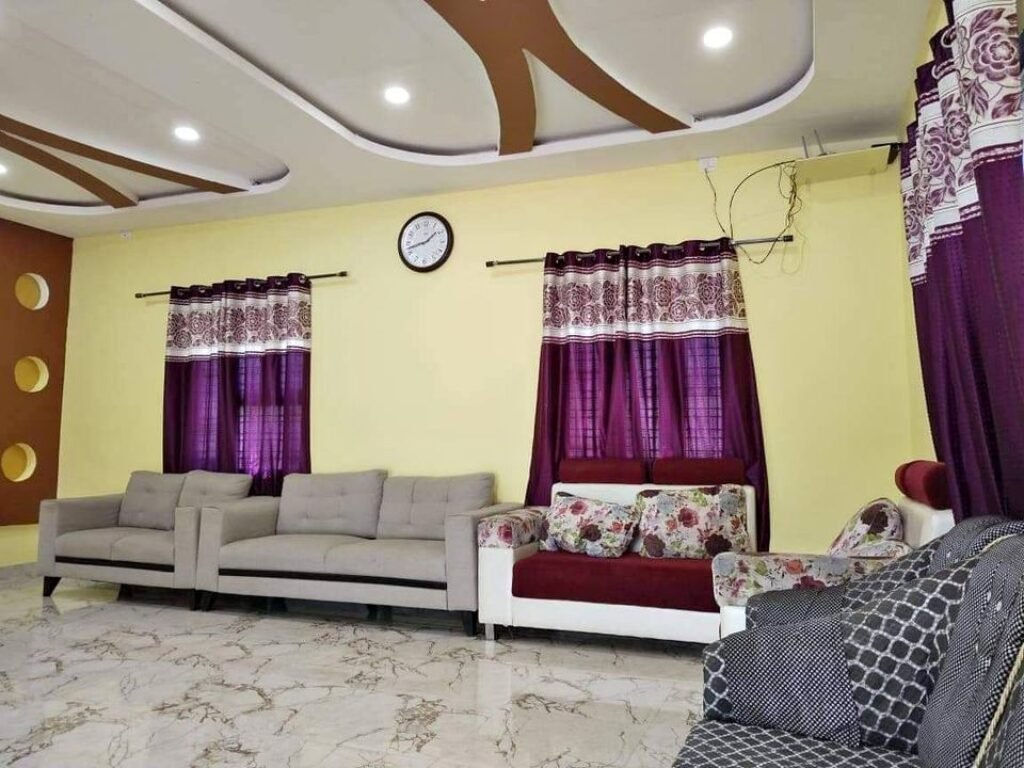
Effects: The top floor of a building usually requires 15-20 percent more cooling capacity than the same room on a middle or ground floor.
2. Exposure to the Sun and Direction of the Windows.
The west and south facing rooms get the direct sunlight at the peak of the day. Big, unshaded windows are magnifying glasses, which increase the amount of heat.
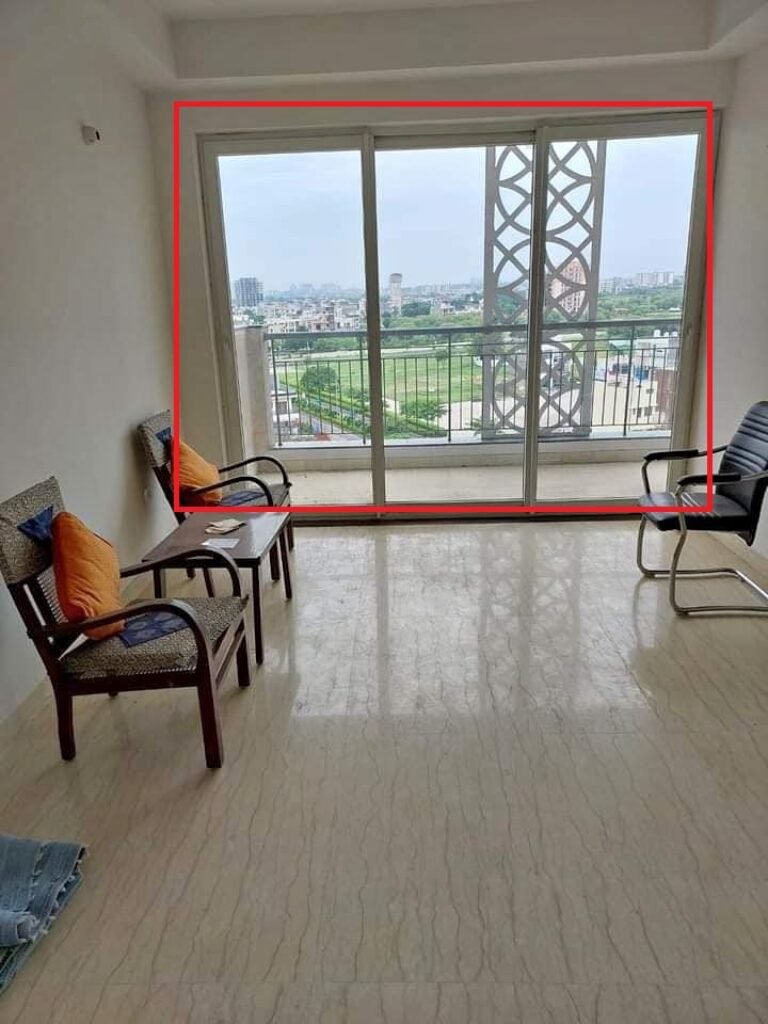
Impact: Excessive sun exposure may add 10-15 to your cooling load. This number can be even higher in case you have big, single-pane windows and no curtains or blinds.
3. Number of Occupants
At rest, the human body produces about 100 watts (about 340 BTU/hr) of heat, and even more when one is active. Two people in a bedroom are manageable, but when 5-6 family members are sitting in the living room on a regular basis, it introduces a significant heat load.
Impact: Add about 600 BTU/hr per additional occupant after the initial two occupants.
4. Heat-Generating Appliances
A room containing a computer, big TV, gaming console or, most importantly, a kitchen next to it without an adequate separation will be more heavily loaded with internal heat.
Impact: In rooms where there is a lot of electronics, add 10-15 percent of your base cooling requirement.
5. Ceiling Height
Majority of AC sizing recommendations presuppose a typical ceiling height of 9-10 feet. The increased ceilings imply an increase in the amount of air that has to be cooled.
Impact: Add about 10% capacity to the capacity with each 2 feet of height over 10 feet.
6. Insulation Quality
Insulated walls (double brick, cavity walls, insulated walls), insulated ceilings, and double-glazed windows significantly decrease the amount of heat that enters the building. Uninsulated rooms – single-brick walls, tiled roofs, old single-pane windows – cool off quickly.
Impact: Good insulation can save you 10 percent, and poor insulation can add 15-20 percent to your need.
7. Regional Climate
The climate of India is vastly different. It is essentially different to size an AC in Jaipur (where temperatures in summer often rise above 45 C) and in Bangalore (where temperatures seldom rise above 38 C).
This is where such characteristics as the ability to operate at high ambient temperatures are important. For example:
- Daikin 2.2 Ton is designed to work up to 54 °C ambient temperature.
- The Panasonic 1.5 Ton can operate up to 55°C ambient temperature.
- The Hitachi 1 Ton provides 100 percent cooling capacity to 43°C and works till 54°C.
In areas where the summers are very hot, it is not a choice to select an AC that has a high ambient rating, but a necessity.
Quick Reference Room Size to AC Size Chart.
Use this chart as a starting point. Modify accordingly according to the above factors.
| Room Size (sq. ft.) | Base Tonnage Needed | BTU/hr Required | Best For |
| Up to 80 sq. ft. | 0.75 Ton | ~9,000 | Small bedroom, study |
| 80–110 sq. ft. | 1 Ton | ~12,000 | Standard bedroom |
| 110–170 sq. ft. | 1.5 Ton | ~18,000 | Medium bedroom, small living room |
| 170–250 sq. ft. | 2 Ton | ~24,000 | Large bedroom, living room |
| 250–350 sq. ft. | 2.5–3 Ton | ~30,000–36,000 | Large living/dining area |
Important Note: These are baseline recommendations for rooms with standard ceiling height (9–10 ft.), moderate insulation, and average occupancy. Always adjust for your specific conditions using the factors listed above.
Room Size vs. AC Size.
To illustrate how sizing is done in practice, we will pair real air conditioners with real room conditions.
Scenario 1: Compact Bedroom (100 sq. ft.) – Hitachi 1 Ton 5 Star Inverter Split AC.
Room profile: 10 ft × 10 ft bedroom, middle floor apartment, north-facing, 12 occupants, standard ceiling.
Calculation:
- 100 sq. ft. × 120 = 12,000 BTU/hr
- No major adjustments needed
- Requirement: 1 Ton (12,000 BTU/hr)
Why the Hitachi 1 Ton works here:
| Parameter | Value |
| Cooling Capacity | 3,516 W (12,000 BTU/hr) at 100% |
| Recommended Room Size | Up to 110 sq. ft. |
| Energy Rating | 5 Star (ISEER: 5.60) |
| Annual Energy Consumption | 485.80 kWh |
| Noise Level (Indoor) | 32 dB — exceptionally quiet |
| Operating Temperature | Up to 54°C |
This AC is also one of the most efficient 1 Ton ACs on the market with the lowest energy usage of 485.80 kWh per year and a 5 Star rating. Its 32 dB noise level indoors makes it perfect in the bedrooms where the quietness of its operation is important – to put it into perspective, 32 dB is softer than the whisper.
The Xpandable+ Technology is especially intelligent on a 1 Ton unit: it can surge to 110% cooling capacity when it is required (such as on hot afternoons) and reduce when the weather is more moderate. This is to say that although your room may have some increased heat loads at times such as a summer afternoon with both occupants and a laptop on, the AC can temporarily increase its output without being permanently over-sized.
The 24 meter long air throw also makes sure that even in rooms with a slightly awkward design, cooling is evenly distributed in all corners.
Projected monthly power bill: With an average electricity price of 7/kWh, the operation of this AC of approximately 8 hours/day in summer months will cost about 900-1100/month -one of the lowest operating costs in its type.
Scenario 2: Medium Bedroom/Small Living Room (150 sq. ft.) — Panasonic 1.5 Ton 5 Star Inverter Smart Split AC.
Room profile: 15 ft x 10 ft bedroom, 2nd floor, partial west sun exposure, 2 occupants, standard ceiling.
Calculation:
- 150 sq. ft. × 120 = 18,000 BTU/hr
- Sun-facing adjustment (+10%): +1,800 BTU
- Adjusted requirement: ~19,800 BTU/hr → 1.5 Ton
Why the Panasonic 1.5 Ton works here:
| Parameter | Value |
| Cooling Capacity | 5,100 W (17,402 BTU/hr) at 100% |
| Recommended Room Size | 120–170 sq. ft. |
| Energy Rating | 5 Star (ISEER: 5.80) |
| Annual Energy Consumption | 681.01 kWh |
| Noise Level (Indoor) | 34 dB |
| Operating Temperature | Up to 55°C |
| Airflow | 703 CFM |
| Operating Voltage Range | 100–290 V (stabilizer-free) |
The ISEER value of 5.80 is one of the highest in the 1.5 Ton category, which implies that the AC is more efficient in converting electricity into cooling than the majority of the competitors. This efficiency difference can save you tens of thousands of rupees of electricity over 10 years of your life.
The 8-in-1 convertible cooling is an outstanding feature of sizing flexibility. It enables the AC to run at various capacity levels – 40 percent to high cooling (HC) mode. This means:
- With a single occupant at night you can run at 40 percent, consuming little electricity.
- When the room is fully occupied on a hot afternoon, you can push to maximum capacity
- You basically have the flexibility of several sizes of AC in a unit.
The DustBuster technology is a solution to a practical issue: the coils in the outdoor unit are automatically cleaned after every 8 hours of use. Outdoor coils contaminated with dirt can decrease the effective cooling capacity of an AC by as much as 2030 percent. Keeping coils clean, the Panasonic retains its rated cooling capacity over its lifetime – that is, your sizing calculation remains correct each and every year.
The AI mode gets to know how you use it and automatically regulates cooling to keep you comfortable and use less energy – in other words, the AI mode effectively optimizes the capacity of the AC to adapt to the real-time conditions.
Monthly electricity bill: 8 hours/day use in summer, estimated to be 1,200-1,500/month.
Scenario 3: Large Living Room (200 sq. ft.) – Daikin 2.2 Ton 4 Star Inverter Split AC.
Room profile: 20 ft × 10 ft living/dining space, top floor, south-west facing, 4-5 family members in the evening, multiple electronics, 10 ft ceiling.
Calculation:
- 200 sq. ft. × 120 = 24,000 BTU/hr
- Top floor adjustment (+15%): +3,600 BTU
- Extra occupants (3 extra × 600 BTU): +1,800 BTU
- Sun-facing (+10%): +2,400 BTU
- Adjusted requirement: ~31,800 BTU/hr → 2–2.5 Ton
Why the Daikin 2.2 Ton works here:
| Parameter | Value |
| Cooling Capacity | 7,034 W (~24,000 BTU/hr) at 100% |
| Recommended Room Size | Up to 200 sq. ft. |
| Energy Rating | 4 Star (SEER: 4.60) |
| Annual Energy Consumption | 1,184.53 kWh |
| Noise Level (Indoor) | 39 dB |
| Operating Temperature | Up to 54°C |
| Air Throw Distance | 22 meters (72 feet) |
In a big room with various factors of heat load, the Daikin 2.2 Ton offers the raw cooling capacity required. It can manage peak and moderate conditions with a 7,034 W (100% capacity) and a scaling capacity of 3,517 W (50% capacity).
Large rooms are characterized by the 22-meter (72 ft.) air throw. A typical AC, 10 – 12 meter air throw, in a 20 ft long room may cause the far end to be warm. The Daikin forces conditioned air through the entire length of even a 20+ ft room and the 3D Airflow system (coordinated flap and louver movement) is designed to distribute the air vertically and horizontally – not a blast of cold in one direction.
Power Chill operation can be useful in a living room case: when the family is sitting in the evening in a room that has been heating all day, Power Chill quickly cools the room and then switches to regular efficient operation.
The Dew Clean Technology automatically sprays the indoor heat exchanger with condensate water – keeping the hygiene and cooling performance intact without human intervention. This is particularly relevant in a family living room where the quality of air directly affects all people.
The triple display option provides real-time power consumption percentage which keeps you aware of the energy consumption – handy in controlling costs in a larger capacity unit.
Estimated monthly electricity bill: About Rs. 2000-2800/month of use of 8-10 hours/day in summer. This is reasonable even with the increased capacity owing to the 4 Star rating.
Comparative Overview at a Glance
| Feature | Hitachi 1 Ton | Panasonic 1.5 Ton | Daikin 2.2 Ton |
| Best Room Size | Up to 110 sq. ft. | 120–170 sq. ft. | Up to 200 sq. ft. |
| Cooling Capacity | 3,516 W | 5,100 W | 7,034 W |
| BEE Star Rating | 5 Star | 5 Star | 4 Star |
| ISEER/SEER | 5.60 | 5.80 | 4.60 |
| Annual Energy Consumption | 485.80 kWh | 681.01 kWh | 1,184.53 kWh |
| Noise (Indoor) | 32 dB | 34 dB | 39 dB |
| Max Ambient Temp | 54°C | 55°C | 54°C |
| Refrigerant | R-32 | R-32 | R-32 |
| Condenser Material | Copper | Copper | Copper |
| Key Sizing Advantage | Xpandable+ (110% capacity boost) | 8-in-1 convertible (40%–HC range) | 22m air throw + 3D airflow for large rooms |
| Approximate Price | ₹38,000 | Mid-premium segment | ₹58,950 |
Common Mistakes to Avoid
Mistake 1: Buying a Bigger AC “Just to Be Safe”
This is the most widespread and the most expensive error. An oversized AC:
- Short cycles – cools too quickly, switches off, humidity increases, switches on. This continuous on/off operation wastes power and strains the compressor.
- Does not dehumidify effectively – the air conditioner requires a continuous running time to dry the air. An oversized unit does not have time to dehumidify.
- Costs more upfront and in running costs.
A better approach? Select the appropriately sized unit having inverter technology and convertible/variable capacity. As an illustration, the 8-in-1 convertible features of the Panasonic 1.5 Ton allow you to dial capacity up on hot days and dial capacity down on cool ones – providing you with flexibility without the punishment of oversizing.
Mistake 2: Ignoring the Floor You Live On
The cooling requirements of two identical 150 sq. ft. rooms on the ground floor and directly under the roof are vastly different. The room on the top floor may need 15-20 percent additional capacity. When in a hot area and on the top floor, consider this in your calculation.
Mistake 3: Only Looking at Star Rating, Not Actual Efficiency
A 5 Star 1 ton AC and a 5 Star 1.5 ton AC are not equally efficient in absolute terms. Star ratings are used to compare the efficiency of an AC with other ACs of the same capacity. It is always important to verify the actual annual energy consumption (kWh) and ISEER value to compare with other tonnages.
For example:
- Hitachi 1 Ton: 485.80 kWh/year (ISEER: 5.60)
- Panasonic 1.5 Ton: 681.01 kWh/year (ISEER: 5.80)
- Daikin 2.2 Ton: 1,184.53 kWh/year (SEER: 4.60)
The Panasonic is more efficient in terms of ISEER than the Hitachi even though it is a larger unit, i.e. it is doing more cooling with the same amount of electricity used.
Mistake 4: Forgetting About Voltage Fluctuations
Voltage fluctuations are usual in most Indian cities and towns, particularly during summer when the grid is at peak load. An AC which needs an external stabilizer is more expensive (₹2,0004,000) and another failure mode.
The Panasonic 1.5 Ton can run on 100 to 290 V without an external stabilizer. Hitachi 1 ton and Daikin 2.2 ton also have built in voltage protection. This feature must be considered in case of frequent voltage problems in your area.
Mistake 5: Not Considering the Room’s Purpose
The cooling requirements of a bedroom and a living room are different:
Bedrooms: Focus on low noise (the Hitachi 1 Ton with 32 dB is almost silent), sleep settings, and constant temperature control. You can even fit a bit smaller since the room is empty at night with fewer people.
Living rooms: Should have more space to accommodate more people, open-plan designs, and the constant opening of doors. What is more important here are features such as long air throw (Daikin 22 meters) and rapid cooling (Daikin Power Chill).
Frequently Asked Questions
Is it possible to use a single large AC instead of two smaller ones in an open-plan space?
With spaces up to 250300 sq. ft. one high capacity AC (22.5 Ton) with long air throw is generally sufficient. This is specifically designed in the Daikin 2.2 Ton 22 meter air throw. Two smaller units tend to be more effective in covering and even cooling beyond 300 sq. ft., or where the space is L-shaped and partitions are used.
What about having a room size between two AC sizes?
When you come up between sizes, say, 14,000 BTU/hr (between 1 Ton and 1.5 Ton), round up to the next size, particularly in a hot climate. Inverter ACs automatically reduce their capacity during mild conditions, thus a slightly larger inverter AC will not waste power as an oversized non-inverter AC would.
Will the star rating affect my sizing of AC?
No. Star rating and AC sizing are decisions independent of each other:
- Sizing: This is the amount of cooling you require (Tons / BTU).
- Star rating is the efficiency of the AC in providing that cooling.
Always make sure you size it right, then select the best star rating you can afford. The power savings between a 5 Star and a 3 Star unit of the same capacity is usually paid back in 2-3 years.
Is 1.5 Ton AC suitable for a 200 sq. ft. room?
Usually, 1.5 Ton AC is appropriate in rooms with a size of 170 sq. ft. or less in normal conditions. In the case of a 200 sq. ft. room, a 2 Ton unit would be ideal. But with a well-insulated, ground-floor, north-facing, and 1-2 occupants, a high-efficiency 1.5 Ton AC with convertible cooling could do it, but would operate at full capacity more frequently, decreasing energy savings.
Is there a difference in sizing between the type of AC (split vs. window)?
The calculation of cooling capacity does not depend on type. The 1.5 Ton split AC and 1.5 Ton window AC both provide around 18,000 BTU/hr. Split ACs are, however, more likely to evenly distribute air (particularly 4-way swing, as is available in all three products discussed here), so they are more useful in practice in medium and large rooms.
What of the room size recommendation of the AC itself?
Manufacturers offer room size suggestions under normal conditions. These are sure points of departure:
- Hitachi 1 Ton: Up to 110 sq. ft.
- Panasonic 1.5 Ton: 120–170 sq. ft.
- Daikin 2.2 Ton: Up to 200 sq. ft.
These are your benchmarks and you can make adjustments based on factors provided in this guide. When your room has several factors that increase heat (top floor + west-facing + large windows), go a size bigger than what the manufacturer suggests.
What is the impact of inverter technology on sizing?
The major advantage of inverter ACs is that they are capable of adjusting their cooling capacity according to the real-time conditions. A 1.5 ton inverter AC does not necessarily operate at 1.5 ton, it can run at 0.6 ton when it is cool outside and run full blast when it is hot outside.
This implies that inverter ACs can tolerate small sizing errors better than the older fixed-speed ACs. The 8-in-1 convertible (40% to HC capacity range) of the Panasonic and the Xpandable+ (up to 110% capacity boost) of the Hitachi are features that make these units highly versatile.
With that said, inverter technology cannot replace proper sizing. Even a fundamentally too small inverter AC that fits in the room will not perform well.
The Bottom Line
It is not that difficult to figure out the correct size of an AC, but you need to take into account several important factors besides the size of the room. The process is as follows:
- Measure your room (length x width in feet)
- Multiply by 120 to get base BTU requirement
- Calibrate to your own circumstances (floor level, exposure to the sun, occupancy, insulation)
- Divide by 12,000 to get tonnage
- Select a quality inverter AC that corresponds to your calculated tonnage, and with features that are appropriate to your room type.
Getting the size correct will ensure that your AC works efficiently, lasts longer, keeps your electricity bills down and most importantly, will keep you comfortably cool when you need it the most.