
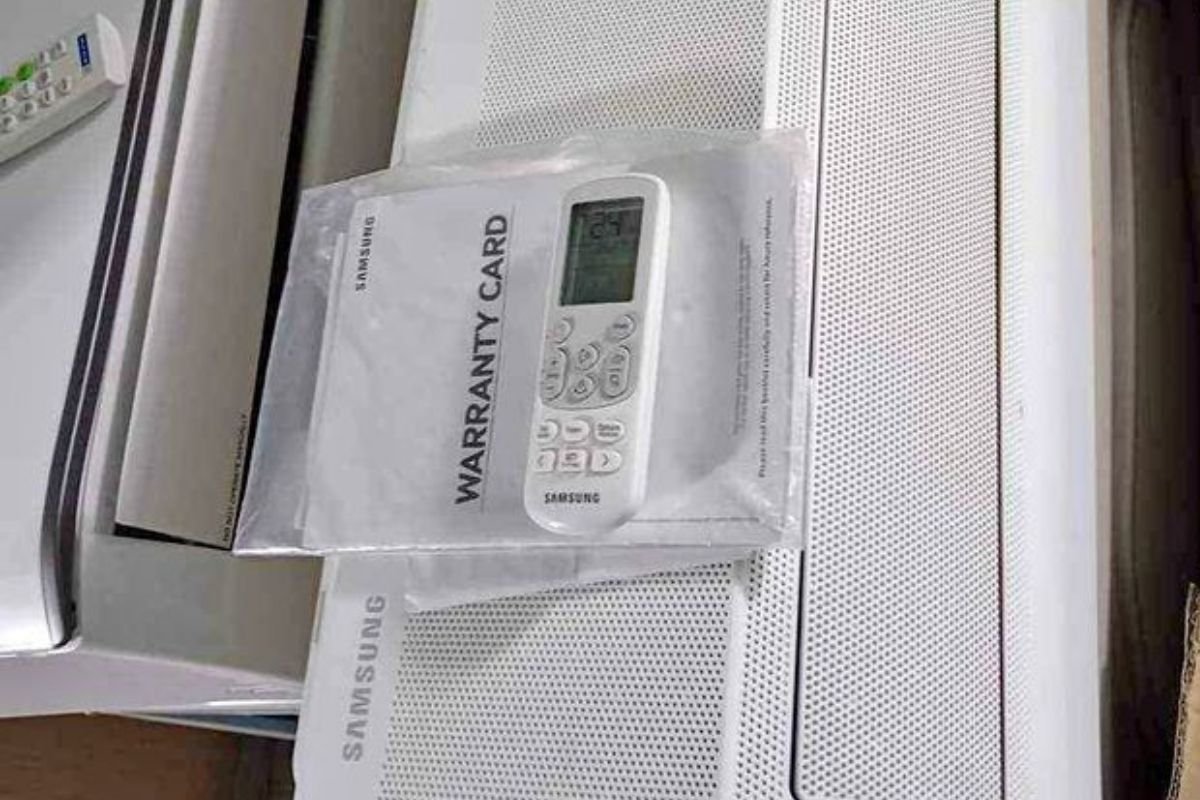
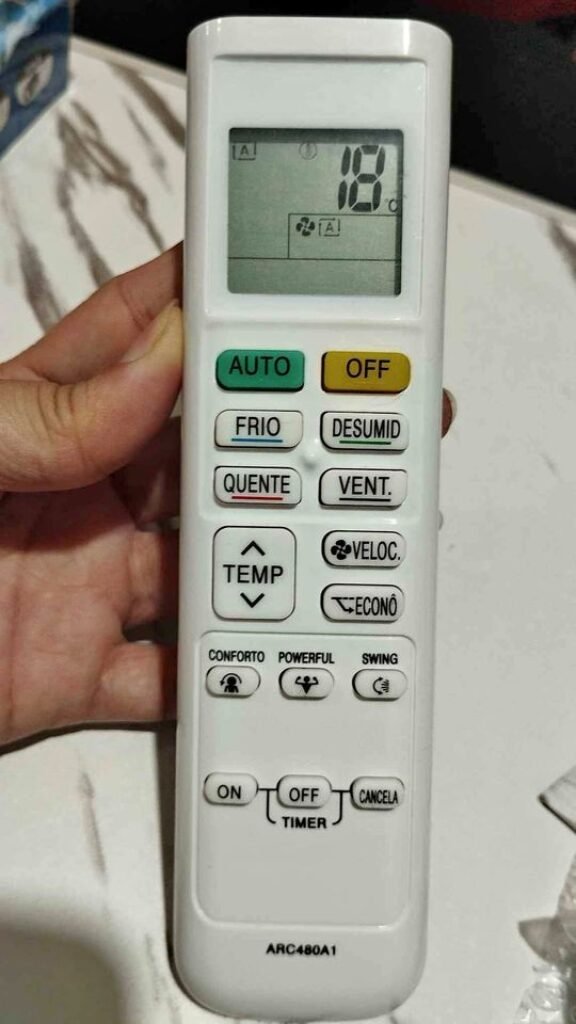
When you have ever picked up your AC remote and saw a button marked ECO – and wondered what it does, you are not alone. One of the most misconceived but truly effective features is ECO mode as 2019 BEE rated air conditioners. Here we will deconstruct just what ECO mode is, how it saves you money, and how the current inverter ACs have developed to provide energy saving cooling that extends well beyond a single button.
What Does ECO Mode in AC Actually Do?
ECO mode – also known as Economy Mode – is a power saving mode on most modern air conditioners. When you turn on ECO mode, your AC changes the manner in which it works to use less electricity and yet make the room reasonably comfortable.
The following is what normally occurs when the ECO mode is enabled:
- The compressor operates at a smaller capacity and this decreases the power consumed by the compressor.
- The target temperature is then automatically set a little higher (typically 1-2 C) to ensure that the AC does not have to work as hard.
- The compressor switches on and off more intelligently, or with inverter ACs, the compressor operates at a slower, more efficient speed.
- The fan speed can be slowed to the lower cooling output.
The result? You consume less electricity, usually 20 to 40 percent less than with the AC operating at full power in the normal cooling mode.
Consider it in the following way: Standard cooling mode is driving a car with your foot on the accelerator. ECO mode is the cruise control on the highway – you arrive at the same destination, but you use much less fuel to do so.
What is the ECO Mode of Inverter ACs?
In order to get a real picture of ECO mode, it is better to comprehend the functioning of modern inverter compressors – the two are intertwined.
The older non-inverter ACs were simply either on or off. This repeated start and stop used a great deal of power (compressors are the most power hungry when starting) and produced uncomfortable temperature changes.
The inverter ACs revolutionized everything. An inverter compressor is a variable-speed compressor – it can operate at various speeds based on the amount of cooling required. In the event that the room is distant to the set temperature, it operates at a higher rate. When the room is near the target, it does not switch off but rather slows down.
ECO mode goes even further with this efficiency. When turned on, it commands the inverter compressor to:
- Limit its maximum operating speed.
- Always focus on energy conservation and not the speed of cooling.
- Keep the temperature within a narrower range, not always trying to keep the power constant to keep the temperature at a precise degree.
This is the reason why ECO mode is most useful in 5-star inverter ACs – the compressor is already programmed to vary its speed smartly. ECO mode merely changes the priority to be not cool as fast as possible but cool as efficiently as possible.
ECO Mode vs. Standard Cooling Mode: A Quick Comparison
| Feature | Standard Cooling Mode | ECO Mode |
| Compressor Speed | Adjusts freely up to maximum capacity | Capped at a lower maximum speed |
| Cooling Speed | Faster — reaches set temperature quickly | Slower — takes a bit longer to cool |
| Energy Consumption | Higher | 20–40% lower |
| Comfort Level | Precise temperature control | Slight flexibility (±1–2°C) |
| Best For | Peak afternoon heat, quick cool-down | Nighttime, mild weather, extended use |
| Electricity Bill Impact | Higher monthly costs | Noticeably lower monthly costs |
How Much Money Can ECO Mode Actually Save You?
According to the Bureau of Energy Efficiency (BEE), the annual energy consumption of an air conditioner is one of the most important metrics for estimating running costs. Consider these two popular 1.5-ton, 5-star inverter split ACs:
| AC Model | Annual Energy Consumption (BEE) | ISEER Value | Wattage |
| Hitachi 1.5T 5-Star Inverter (RAS.V518PCDIBT) | 690.72 kWh | 5.60 | 1,275W |
| Panasonic 1.5T 5-Star Wi-Fi Inverter (CS/CU-NU18BKY5WX) | 681.01 kWh | 5.80 | 1,178W |
Note: ISEER measures how efficiently an AC converts electricity into cooling over the entire season. A higher ISEER means greater efficiency.
Now, let’s estimate the savings:
- Average electricity rate in India: ₹7–₹9 per unit (kWh), depending on the state and slab.
- Annual cost at ₹8/unit (standard mode):
- Hitachi: 690.72 × ₹8 = ₹5,526/year
- Panasonic: 681.01 × ₹8 = ₹5,448/year
Assuming that ECO mode can save at least 25 percent of the power used within the hours that it is in use (say, at night – about 8 to 10 hours a day), the real annual savings may be between 800 and 1500 rupees per year, depending on how it is used and local electricity rates.
In 10 years (the warranty of the compressors of both these models) that is 8,000 to 15,000 saved money – simply because you used one button on your remote more frequently.
When Should You Use ECO Mode?
ECO mode is not supposed to be on 24/7 – it works best in some cases:
Optimal ECO Mode Usage.
- During the night when you are asleep – Your body only requires less cooling since the metabolism is slow. ECO mode offers a mild and steady cooling without excessive cooling of the room at 3 AM.
- In a mild climate -When the temperature outside is not too hot (28-35 C), the AC does not require full power. This is efficiently managed by ECO mode.
- In smaller or well-insulated rooms – ECO mode will not allow the overcooling of the room in case the room is smaller than the maximum recommended coverage of the AC.
- One or two occupants in the room -Less occupants mean less body heat, and the AC can comfortably keep the room at a lower power level.
When ECO Mode Should be avoided.
- Peak summer afternoons – When the outside temperature reaches 43 °C to 54 °C, the AC must be running at full blast. As an example, the Hitachi RAS.V518PCDIBT has a 100 percent cooling capacity at 43 o C and is designed to work in 54 °C. The Panasonic CS/CU-NU18BKY5WX also works well in 55 °C. When it is hot like this, leave standard mode to do the heavy work.
- Cooling a room the first time – Once you have entered the room, and the inside temperature is 38v, then normal cooling should be used to cool the room before using the fan. Then put it to ECO mode to sustain it.
- Big rooms with numerous people – Kitchens when cooking, living rooms when having a party or any other situation that requires a lot of heat.
ECO Mode vs. Other Energy-Saving Features in Modern ACs
ECO mode is just one piece of the energy-efficiency puzzle. Modern inverter ACs come with a suite of technologies that work alongside (or even better than) a simple ECO button. Let’s look at how some of these features compare:
1. Convertible/Adjustable Tonnage Cooling
Both the Hitachi and Panasonic models featured here offer convertible cooling:
- The Hitachi Xpandable+ Technology can automatically increase cooling capacity by up to 110% when the heat load is extreme, or reduce it when the room is already cool. It essentially turns your 1.5-ton AC into a range — working like a smaller-tonnage AC when full power isn’t needed.
- The Panasonic 8-in-1 Convertible Mode adjusts cooling performance from 40% capacity all the way up to its highest capacity (HC mode), offering eight different cooling stages to match room size, number of occupants, or personal preference.
How this relates to ECO mode: These convertible features achieve a similar goal as ECO mode — reducing energy consumption when full power isn’t needed — but they do it more granularly and intelligently. You could say that convertible cooling is like having eight different ECO modes instead of one.
2. AI-Based Cooling (Smart Sensors & Learning)
Contemporary ACs do not respond to your orders, they are predictive of your needs.
- The Hitachi model has a technology of Octa Sensor – eight sensors that measure the conditions of the room and automatically regulate the cooling to achieve maximum efficiency.
- The Panasonic model has an AI Mode that gets to know your usage behavior and automatically changes the settings to strike a balance between comfort and energy conservation. It also has AQI (Air Quality Index) tracking and personal sleep schedules that program hourly temperature changes during the night.
The relation to ECO mode: AI and sensor-based cooling eliminate the guesswork in the timing of ECO mode. You do not need to press a button to remind you to do it; the AC knows how best to cool your room at any particular time.
3. Sleep Mode vs. ECO Mode
Many people confuse ECO mode with Sleep mode, but they serve different purposes:
| ECO Mode | Sleep Mode | |
| Purpose | Reduce energy consumption | Optimize comfort during sleep |
| What it does | Caps compressor speed, widens temp range | Gradually increases temperature (0.5–1°C per hour) |
| Best for | Any time you want to save energy | Nighttime use specifically |
| Available on | Most modern ACs | Most modern ACs |
The Panasonic model goes even further with the Custom Sleep Profiles, which allows you to program specific temperatures at each hour of the night in the MirAIe app – avoiding freezing in the middle of the night, but still using very little power.
Pro tip: Set ECO mode along with Sleep mode to save the most at night, provided that your AC allows it.
Beyond ECO Mode: What Else Affects Your AC’s Energy Efficiency?
ECO mode is an excellent beginning, but overall power consumption of your AC is influenced by a number of other factors:
1. Star Rating and ISEER Value Matter — A Lot
The most important indicator of energy efficiency of an AC is the BEE star rating. Both the Hitachi and Panasonic models discussed here have a 5 star rating which is the highest rating.
However, compare a bit deeper into the ISEER value:
- Panasonic CS/CU-NU18BKY5WX: ISEER 5.80 – consumes 681.01 kWh/year.
- Hitachi RAS.V518PCDIBT: ISEER 5.60 — consumes 690.72 kWh annually.
The greater ISEER is, the more cooling the AC will generate with a unit of electricity. Even a minor variation such as the 0.20 variation here would be translated into approximately 10 kWh/year or approximately 80/year at existing rates.
2. Proper Room Sizing
Both models have a cooling capacity rating of 1.5 tons:
- Hitachi: Suited to rooms 111 to 150 sq. ft.
- Panasonic: 120-170 sq. ft. rooms.
A 1.5-ton AC in a 250 sq. ft. room will make it operate at full load at all times, which will nullify the advantage of ECO mode. On the other hand, it is not cost effective to use in a very small room (less than 100 sq. ft.) as the AC is oversized to the room.
Get the maximum out of your AC capacity by matching it with your room size.
3. Clean Coils = Better Efficiency
Contaminated evaporator and condenser coils lower the rate of heat transfer, causing the compressor to operate more intensely and extensively, a direct cause of energy consumption.
Here, features aimed at maintenance really count:
- Hitachi ice Clean (powered by FrostWash Technology) is a three-step process (Freeze, Melt, and Dry) which automatically cleans the coils of the indoor unit. Frost collects dust on the coil, melts it and empties it, and then undergoes a drying cycle. This maintains the coil clean and efficient without the human touch.
- The Panasonic DustBuster™ Technology is targeted at the outdoor unit – every 8 hours of operation, the outdoor fan switches direction to blow off the condenser coils 3 minutes. This is especially useful in dusty Indian environment where the outdoor units are subjected to pollution, construction dust and debris.
The importance of this to ECO mode: A clean AC coil is up to 15 to 20% more efficient than a dirty one. In case your coils are full of dust, even the ECO mode will not help you much as the compressor will need to make up the loss of heat exchange.
4. Copper Condenser Coils
The condensers of both models are 100% copper tubed, which is important:
- Copper conducts thermal energy more quickly than aluminium, i.e. it is a better thermal conductor.
- Hitachi model: The Hitachi model employs 100 percent inner-grooved copper tubes, which form turbulent flow of refrigerant within the tube, which further increases the rate of heat transfer.
- Both models have anti-corrosive coating, with Hitachi having Nano Tech Ultra Coating and Panasonic having protective coating on their outdoor unit, which increases the life of the copper coils.
Efficient heat exchange implies that the compressor does not have to operate as long as it needs to cool – which directly saves on energy use whether you are in ECO mode or not.
5. Operating Voltage Range and Stabilizer-Free Operation
Stable power supply is also important in energy efficiency:
- The Panasonic model can run on a broad voltage of 100-290 V – stabilizer free operation that saves the compressor against the effect of voltage variations which is prevalent in most Indian cities and towns.
- The Hitachi model has a SafeGuard system that offers overload safety protection, compressor control, and defense against voltage changes and even pest destruction to the exterior unit.
The changes in voltage may lead to the compressor consuming more current than is required and wasting energy. The AC is operated with stabilizer-free operation and inbuilt protection systems to ensure that the AC operates at optimum efficiency irrespective of the conditions of power supply.
The Best Energy Saving with your AC.
The following is one of the ways of using ECO mode, but still have the lowest possible electricity bills:
1. Preheat the Temperature to 24 °C -26 °C.
Bureau of Energy Efficiency suggests the best temperature to be 24 °C.
In this case, we have talked about the optimal temperature to use in AC to achieve balanced energy use and comfort cooling.
Every level of reduction reduces energy consumption by approximately 6 percent. Most of the people can only feel comfortable in the room at 24 °C and ECO mode.
Interestingly, the My Mode options of the Hitachi model are indicative of this wisdom, with the three customizable presets being configured at 20.5 °C, 24 o C and 27.5 °C, providing you with a one-second range between cold and efficient to ultra-economical.
2. Timer Function.
Switch off the AC when you are not using it. ON/OFF timers are permitted in both models:
- Program the AC to shut down 30 minutes before you get up – the room is cool enough due to the leftover cooling.
- Set it to switch on 15 minutes before you arrive at home, the room is cool when you enter the room and you are not subjected to the energy wasting blast cooling phase.
3. Wash or Change Filters on a regular basis.
The blocked filter decreases the airflow and this makes the AC more laborious. The Hitachi model has an Anti-Bacterial Mesh Filter that has a Filter Clean Indicator that reminds you when the filter needs cleaning. The Panasonic model does more by having a PM0.1 filter that traps the ultra-fine particles that are smaller than 0.1 microns.
Wash filters after every two weeks of heavy use in months and change filters as suggested by the manufacturer.
4. Close Doors and Windows.
This is an easy one, but it is the most common energy-saving tip that is overlooked. The AC cools the incoming warm air continuously by an open door or window – in other words, cooling the outside. This cannot be compensated by any amount of ECO mode.
5. Swing 4-Way to evenly cool.
The Hitachi and Panasonic models also possess 4-Way Swing that swings the air horizontally and vertically. This spreads the cool air uniformly throughout the room eliminating hot spots and causing the compressor to operate at a slower speed.
Another model by Hitachi also has the option of 24-meter air throw, which is especially useful in bigger rooms where the cool air might not be able to penetrate the corners.
Which ACs Should You Consider for the Best Energy Efficiency?
Based on the products we’ve evaluated, here’s a quick comparison to help you decide:
| Feature | Hitachi 1.5T 5-Star Inverter | Panasonic 1.5T 5-Star Wi-Fi Inverter |
| Price | Check current price | Check current price |
| ISEER | 5.60 | 5.80 |
| Annual Energy Consumption | 690.72 kWh | 681.01 kWh |
| Max Operating Temperature | 54°C | 55°C |
| Noise Level (IDU) | 37 dB | 34 dB |
| Convertible Modes | Auto Convertible (Xpandable+) | 8-in-1 Convertible |
| Smart Features | Smart View Display, My Mode | Wi-Fi (MirAIe/Matter), AI Mode, Voice Control, Custom Sleep Profiles |
| Coil Cleaning | ice Clean (FrostWash) — cleans IDU coils | DustBuster™ — cleans ODU coils |
| Air Quality | Anti-Bacterial Filter, Odour-free air | PM0.1 Filter, AQI Monitor |
| Voltage Range | SafeGuard system | 100–290V (Stabilizer-free) |
| Warranty | 1 Year Standard + 5 Year Comprehensive (₹299+GST) / 10 Year Compressor | 5 Year Product + 10 Year Compressor |
| Room Size | 111–150 sq. ft. | 120–170 sq. ft. |
The Bottom Line: Should You Use ECO Mode?
Surely–and here the plain rule of thumb:
- Always use ECO mode when you spend a lot of time in the room, in the evening Or night, or when the weather is not extreme. It will save you electricity costs without significantly impacting on your comfort.
- Use standard mode when you first switch on the AC to cool the room quickly, on hot summer afternoons, or when the room contains a lot of heat sources (cooking, lots of people, direct sunlight).
- Use ECO mode with other smart habits – set 24C, use timers, clean filters, keep doors closed and use 4-way swing to evenly cool.
Recent 5-star inverter ACs such as the Hitachi RAS.V518PCDIBT and Panasonic CS/CU-NU18BKY5WX are already designed to be exceptionally energy efficient. The cherry on the cake is the ECO mode, a one-button method of extracting even more savings out of an already efficient machine.
The ECO button on your AC is not a marketing gimmick. It is saving money, one chilling at a time.